Large Format Porcelain Panels: Benefits, Installation Challenges, and Why They Cost More
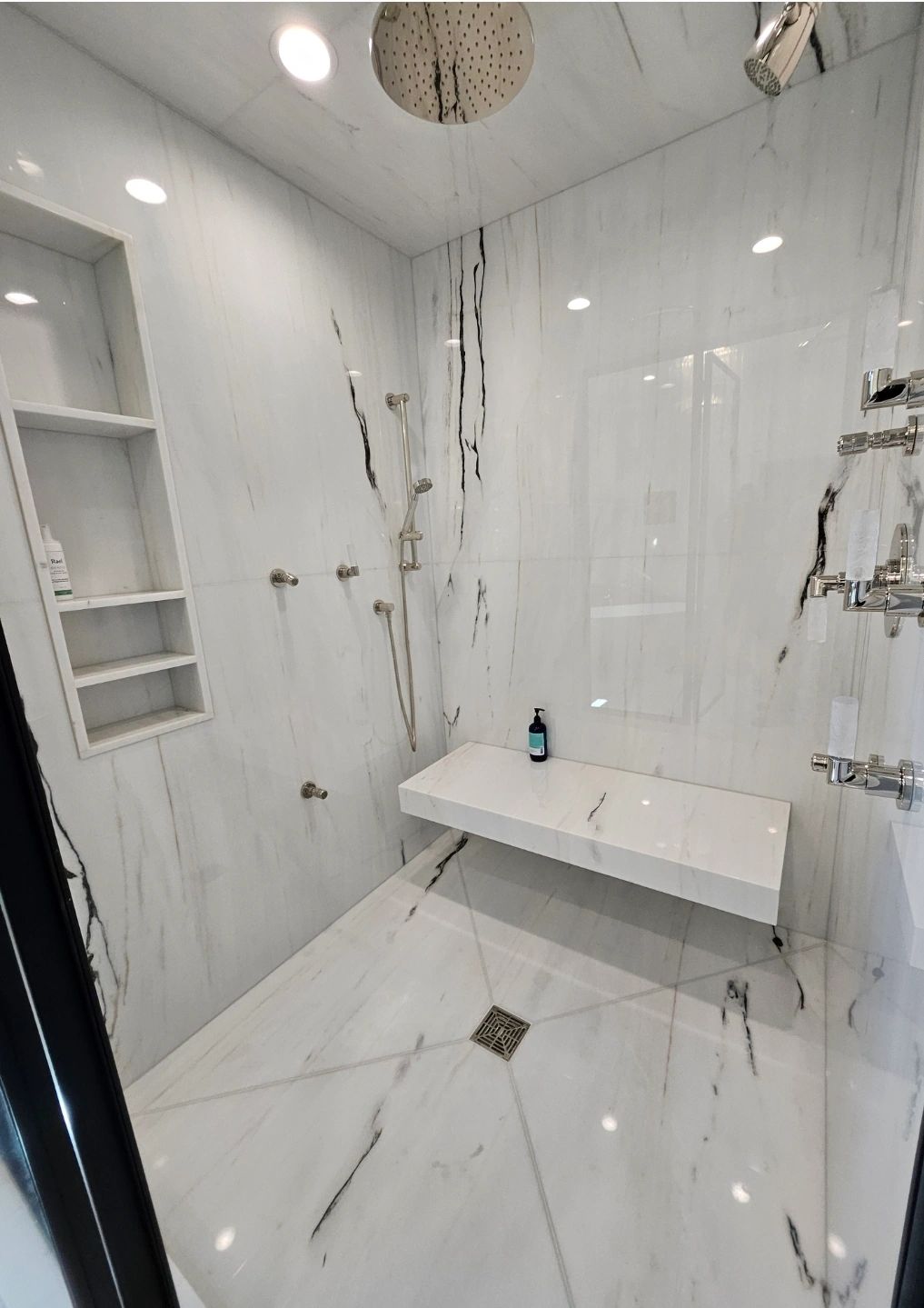
Large format porcelain panels, often measuring between 3 to 4 feet wide and up to 8 feet or more in length, are increasingly popular for achieving a sleek, modern aesthetic. With thicknesses ranging from 3mm to half an inch, these panels provide an elegant, minimalistic look with fewer grout lines—perfect for creating a continuous, seamless design.
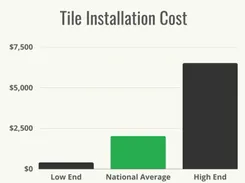
However, these panels also come with challenges, especially when it comes to installation and cutting, which can contribute to the higher cost of installation. In this blog, we’ll discuss the benefits of using large format porcelain panels, the difficulties in installing and cutting them, and why they often cost more to install.
Benefits of Large Format Porcelain Panels
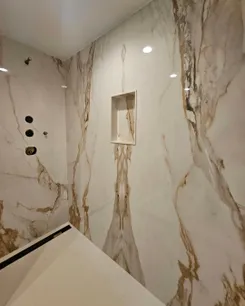
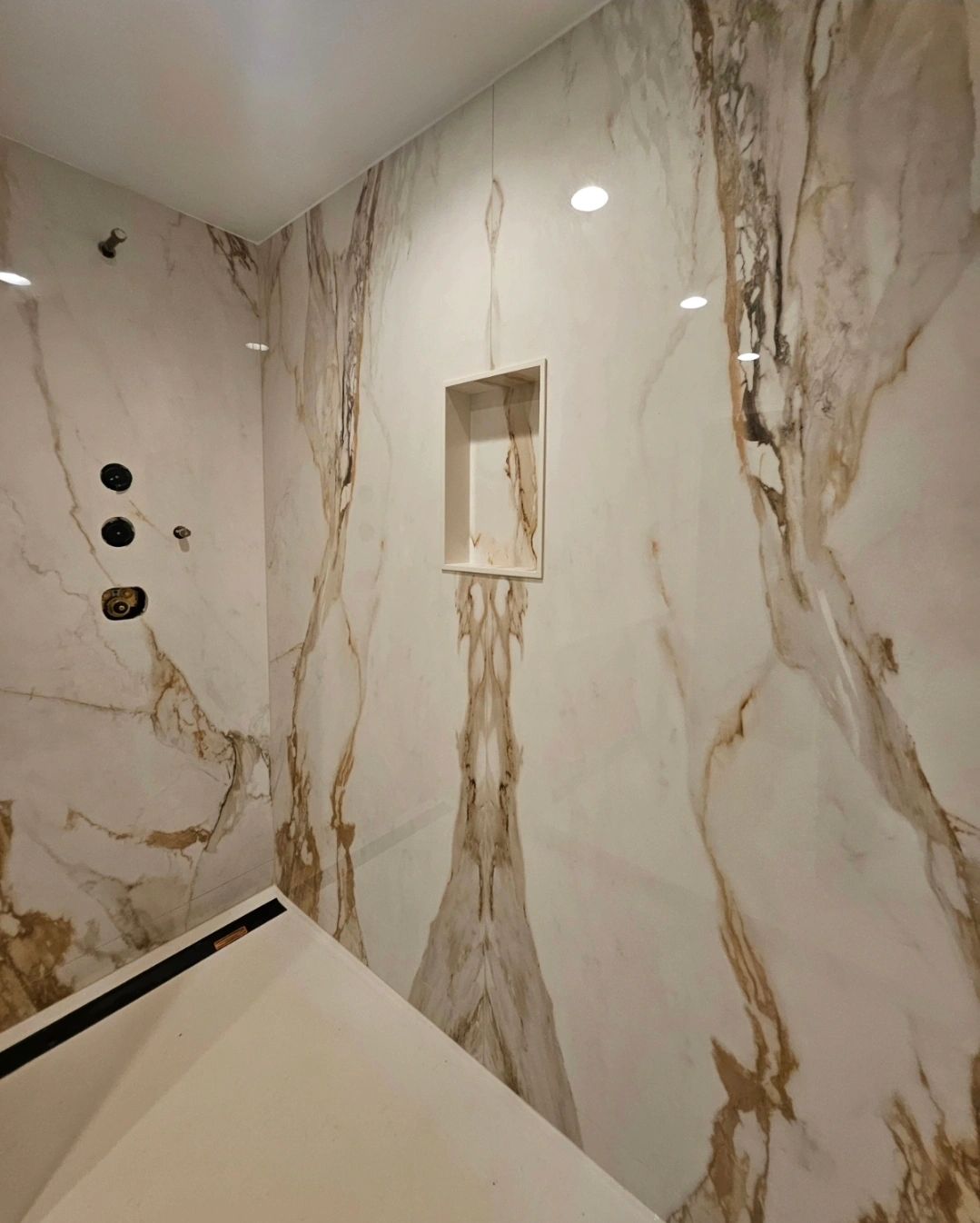
- Seamless Aesthetic: One of the most significant advantages of large format panels is the sleek, seamless look they create. Fewer grout lines contribute to a cleaner and more modern appearance, ideal for bathrooms, kitchens, and commercial spaces. Bookmatching large porcelain panels can create a dramatic visual effect where veining continues seamlessly across panels, forming a stunning focal point.
- Durability: Despite their thin profile, large porcelain panels are highly durable. They resist scratches, stains, and moisture, making them ideal for high-traffic and wet areas.
- Versatility: These panels can be installed on walls, floors, countertops, and even ceilings. Available in designs that mimic natural stone, marble, or concrete, they work across many design styles.
- Low Maintenance: Porcelain naturally resists mold, mildew, and staining. The reduced grout lines also make cleaning easier compared to traditional tile layouts.
- Luxurious Look: Bookmatching—where panels are mirrored to align veining patterns—adds sophistication similar to high-end stone slabs, elevating the entire space.
The Challenge of Installation and Cutting
While the beauty of large porcelain panels is undeniable, installing and cutting them presents several challenges:
- Handling the Size: Panels up to 8 feet long require multiple installers and specialized suction cup lifters or framing systems to prevent cracking during transport and placement.
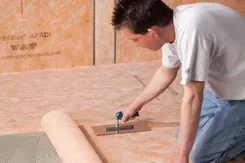
- Surface Preparation: Large panels are unforgiving when it comes to uneven substrates. The surface must be perfectly flat to prevent lippage or cracking, adding preparation time.
- Cutting Precision: Standard tile saws are not sufficient. Installers often use rail cutters, diamond blades, or water jet systems. Cutting bookmatched panels requires extreme precision to maintain pattern continuity.
- Mortar Application: Proper bonding requires back-buttering the panel and applying mortar to the substrate to ensure full coverage and eliminate air pockets.
- Bookmatching Complexity: Achieving perfect alignment of veining demands careful planning and meticulous placement. Even small mistakes can disrupt the visual flow.
Why the Cost of Installation is Higher
- Specialized Equipment: Rail cutting systems, water jet cutters, and heavy-duty lifting equipment are required—tools that represent major investments.
- Skilled Labor: Installing large format porcelain panels requires advanced training and experience. Not all installers specialize in this type of work.
- Time-Intensive Process: Surface preparation, precision cutting, and pattern alignment take significantly longer than standard tile installations.
- Additional Manpower: Due to their size and weight, multiple installers are often required, increasing labor costs.
Conclusion
Large format porcelain panels offer exceptional aesthetic and functional benefits, from their seamless look to their durability and low maintenance. However, the challenges of handling, cutting, and installing these oversized panels—especially when bookmatching is involved—contribute to higher installation costs.
For luxury spaces where sophistication and modern design are the goal, large format porcelain panels are an outstanding investment, delivering a timeless and visually striking result.
Stay tuned for more expert tips and insights on tile installation and design in our upcoming blogs.